
Nikita Smagin (left), David Sharp (right)
Yevgenia Albats*: The war in the Middle East is taking on a rather broad character. Futures for gas in Europe and Brent oil prices have already spiked. Some countries support the actions of the US and Israel against Iran, others condemn them. Operation Epic Fury is still in its early stages. US President Donald Trump stated that it could last a month or more.
Why did the US and Israel decide to strike Iran right now, when it seemed that negotiations on the Iranian nuclear program could still continue? Why did this happen during the holy month of Ramadan for Muslims? In Israel, Purim is being celebrated. Is the start of the war somehow connected to these holidays?
The «Gerald Ford» Factor
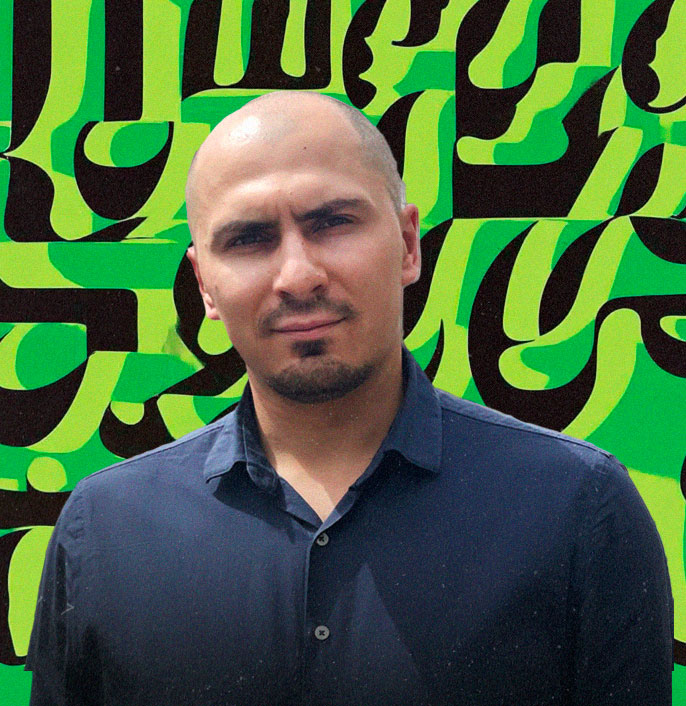 Nikita Smagin: It seems to me that it's unlikely related to Ramadan. I think there's some idea that supposedly Israel deliberately attacks Muslim countries during Ramadan, but I think that's not the case. It doesn't significantly affect the situation in Iran, not to mention that in Iran, Ramadan is an official holiday, a fast, there are restrictions, but I don't think it's an important factor. It's more likely related to the fact that by this time, the United States had concentrated a sufficient number of troops, and then they struck.
In this sense, it seems to me that the negotiations were not exactly a distraction, but to a significant extent, it was the last chance. «Well, let's try, since the Gulf countries are pressuring Trump — let's try, let's talk. Probably nothing will come of it. Well, to hell with it, nothing ventured, nothing gained. And in the meantime, we'll bring in ammunition and pull up the forces». It seems to me that this is more likely explained this way. That is, as soon as the aircraft carrier Gerald Ford, which participated in the capture of Nicolas Maduro in Venezuela, finally reached from Venezuela to the coast of Israel — and this happened on February 27, — then Trump announced that he was dissatisfied with how the negotiations were going. And the next day, on February 28, the operation began.
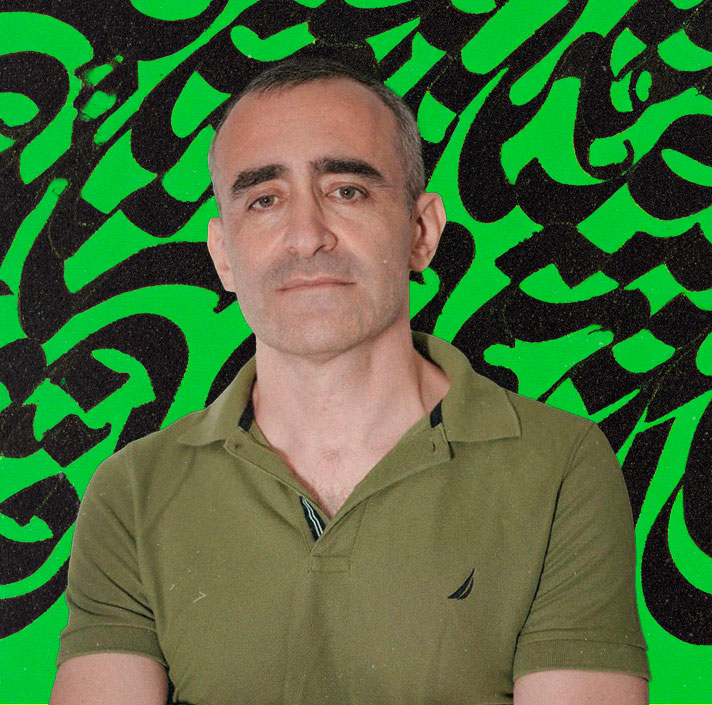 David Sharp: From an operational and strategic point of view, I assure you, neither Purim nor Ramadan had the slightest significance. President Trump spoke about the fact that <at the moment of the bombing of Khamenei's residence> the military-political leadership in Iran gathered for breakfast, and at that moment they were hit. The mention of breakfast seems quite amusing because during the month of Ramadan, they could not have gathered for breakfast. They gathered for other purposes, but clearly not to have breakfast. Seriously, the situation was roughly as follows. From a military point of view, it was necessary to accumulate a group to the necessary volumes, gather means of both defensive and offensive nature. Meanwhile, President Trump, in my opinion, quite sincerely tried to achieve a result in the negotiations, but at the same time, he presented Iran with very tough demands. For Iran, these demands were unacceptable. Both Trump and many others understood that the chances of success were slim, but they wanted to give additional legitimacy to their actions and a chance to the opponent. At the moment when it became finally clear in the last round that the Iranians did not accept the American proposals, it became clear: the gap between the positions was insurmountable. By this time, everything was ready. As the Saudi Arabian defense minister said in private conversations: «If you don't strike now, the regime will become stronger». And this will be a very serious strategic and political damage for you.
Israel has no shortage of those willing to help in Iran for a variety of reasons: for money and simply out of hatred for the ayatollahs' power
Yevgenia Albats: How did it happen that Ali Khamenei was in his office and not in a bunker, and the main generals were with him? Does this mean there is a split among the military in Iran, because the source of information is clearly from there?
Nikita Smagin: If we take intelligence — where it came from, I think there are many options. This doesn't necessarily indicate a split. It could just be a specific person from whom the information leaked. In the history of the twelve-day war, there were moments when security neglected safety considerations, used the phone, and they were detected. Israel generally has no shortage of those willing to help in Iran for a variety of reasons: for money and simply out of hatred for the power. When we talk about a split, I mean a split in positions and the presence of people willing to switch sides. I don't see that yet.
David Sharp: I don't think anything special happened here. Of course, betrayal at the top cannot be ruled out, but I am looking for banal reasons. Circumstances show that Israeli and American intelligence have extensive penetration in Iran. And this is not necessarily agents — it is also electronic intelligence and visual. Serious people gather at the residence — this can simply be tracked: there's the car of so-and-so, there's the car of another. Plus wiretapping, plus surveillance. They knew this meeting would take place in daylight. Almost any Western-style air force attacks are carried out at night. I think in daylight, the Iranians considered themselves safer. The night ended, vigilance dropped. It was a fatal mistake. I see no problems for Israel and the Americans to track a bunch of high-ranking officials in one place.
Can You Touch the Top Leaders?
Yevgenia Albats: The first Israeli Air Force attack on Tehran was the largest in history: 200 fighters attacked 500 targets. Where did they take off from, since it's far from Israel to Iran?
David Sharp: Israeli Air Force fighters took off from Israeli airfields. Israeli planes cannot take off from aircraft carriers — they are not carrier-based aviation. The distance is large, 1200 km. Some targets were attacked with aeroballistic missiles from a great distance. I suspect Khamenei's residence was attacked with heavy bombs from a distance of tens of kilometers by F‑35 aircraft, which have reduced radar visibility, accordingly, they go where air defense has not yet been suppressed. The Americans provide significant assistance to Israel in aerial refueling. This allows Israeli planes to spend more time over Iran.
Yevgenia Albats: There was talk of an unspoken agreement not to kill country leaders. In the last war, Khamenei was not touched. Why did they decide to eliminate him now? Nikita, what is the reaction in Azerbaijan? After all, Khamenei is ethnically Azerbaijani.
Nikita Smagin: There is no serious surge in Azerbaijan. There is interest, some are worried about a possible influx of refugees, some think about «Southern Azerbaijan», meaning that in the national composition of Iran there are two pillars: Persians and Azerbaijanis, and Azerbaijanis make up, according to various data, up to 40 percent of the population. But these are rather fantasies in individual minds, not official policy. Azerbaijan is preparing for the regime to remain and is not trying to quarrel with it.
As for the elimination of Khamenei — the transformation of norms is underway. Gaddafi was killed by his own during the civil war, Saddam Hussein was hanged by the verdict of an Iraqi court. But here something else is important: an aura of martyrdom often arises around such rulers. The reaction of the same Pakistan shows that it can shoot in unexpected places. In Iran itself, most either rejoiced or sneered. Loyalists are in the minority.
Yevgenia Albats: But we see the picture, now in Iran they are crying, as they cried for Stalin in the USSR. Is it the same effect?
Nikita Smagin: The mechanism of mobilizing supporters still works. But compare with the peak after the death of Qasem Soleimani in 2020 — then the crowds were truly huge. Now only the loyalists came out, this is a core of 20–30 percent: military, officials, public sector employees. I don't see this core expanding at the expense of those who hate the government.
David Sharp: In the unspoken agreement you are talking about, there is logic. There is always a discussion: won't someone more dangerous come in place of the eliminated ruler? When Musawi (Nasrallah's predecessor) was killed, Nasrallah came, who turned out to be much more dangerous. But today, when the task was to shake the regime, it was decided that eliminating the leader is a way to give an impulse for the system's imbalance. It is also a demonstration that Israeli intelligence is capable of reaching anyone.
Yevgenia Albats: Who comes to replace Ali Khamenei?
Nikita Smagin: The system works according to the instruction. A transitional council is formed: President Pezeshkian, head of the judiciary Ejei, and Ayatollah Arafi. The main contender for the post of supreme leader, Ali Khamenei's son Mojtaba, was said to be killed, but the information was not confirmed. Arafi is a theologian, he has no experience in administration or political struggle. The system has been preparing for Khamenei's departure for the last five years, but it was waiting for other conditions. Now this is a huge stress for the system: it's unclear what to fight for if you can be killed the next day.
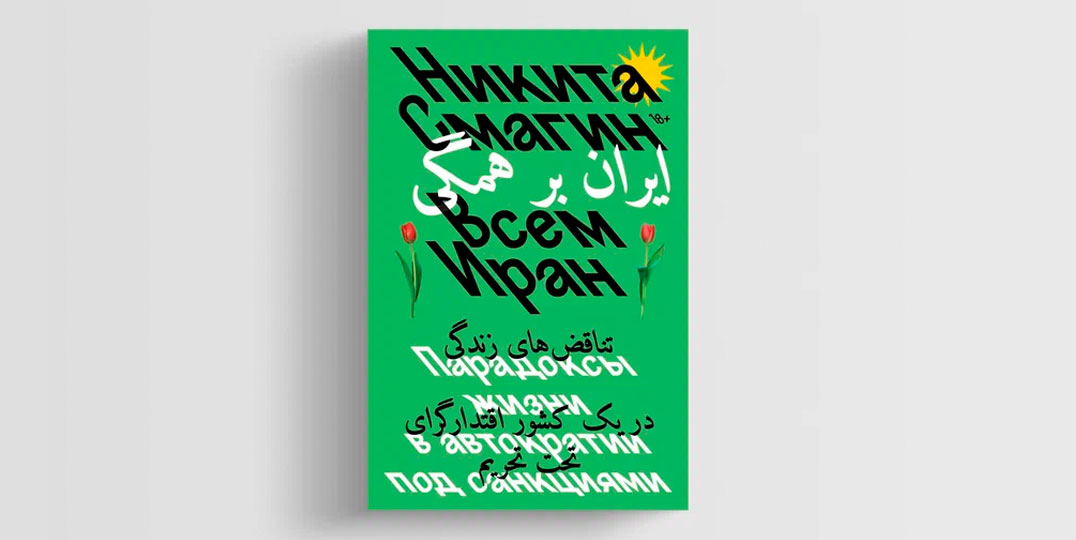
Nikita Smagin's book «All of Iran»
War with Neighbors
Yevgenia Albats: Iran is hitting Jordan, Kuwait, Qatar, UAE. The airport in Dubai has been smashed, there are attacks on oil fields. Why are they hitting Muslim countries?
The regime wants Muslim countries to pressure the Americans. But the Iranians are mistaken: their actions only convince neighbors that this regime needs to be gotten rid of
Nikita Smagin: This is the logic of a cornered beast. They strike where they can reach, to punish those who support what is happening. It's an attempt to make them influence the situation. There's little rationality here, more like desperation.
David Sharp: The Iranians are acting on a «sub-threshold» level. If they wanted to cause colossal damage, they would strike without restrictions. So far, they are only creating discomfort, blocking the Strait of Hormuz. They want these countries to pressure the Americans. But the Iranians are mistaken: their actions only convince neighbors that this regime needs to be gotten rid of. Iran has already overstepped the mark by hitting the British base in Cyprus, which angered London. In response, Prime Minister Starmer allowed the Americans to use British military bases.
Yevgenia Albats: There are many Russians in Dubai. Why are they hitting it?
David Sharp: The Emirates are perceived as an ally of Israel. A couple of drones on skyscrapers or the airport are enough to destroy the image of a «tourist paradise». The air defense of the Gulf countries works well, shooting down 90%, but there is no 100% defense. A tragic incident occurred in Kuwait: their air defense mistakenly shot down three American planes. This is «friendly fire», such things happen in war conditions.
Yevgenia Albats: «Hezbollah» has entered the war. What are their capabilities?
David Sharp: «Hezbollah» delivered a symbolic strike. Their potential is now several times less than it was before the war, due to Assad's defeat and Iran's problems. Israel is already taking active strikes against «Hezbollah». They hoped that Israel would not respond strongly, but Israel is taking significant measures. The head of «Hezbollah»'s intelligence has been eliminated. And at the same time, one of its allies, the commander of the Lebanese branch of the «Islamic Jihad». There are still interesting personalities, there are strikes on warehouses, on firing positions. «Hezbollah» played into Israel's hands in this regard, giving both reasons and causes to deliver the most significant strike possible. It was planned anyway, but apparently not at such a level, because there would not have been international legitimacy. Today it exists from all points of view, even, one might say, from within Lebanon. Israel was just waiting for this reason. They made a strategic mistake by getting involved in this matter. Israel will press them either in parallel with Iran or immediately after.
Without organization, it is extremely difficult to rise against armed power. The IRGC controls 20% of the economy: communications, transport, taxis. They will cling to power
Yevgenia Albats: How long can Iran fight?
Nikita Smagin: Missiles will last for a week or two, depending on the intensity of the shelling. But the problem is that the protest camp in Iran is not used to weapons, they have not served in the army. Without organization, it is extremely difficult to rise against armed power. The IRGC controls 20% of the economy: communications, transport, taxis. They will cling to power because under any other system they will lose everything.
Yevgenia Albats: Historian Simon Sebag Montefiore wrote that the dawn of a «New Middle East» is coming. Do you agree?
Nikita Smagin: I am more pessimistic. I see a hotspot of instability for many years. Interest in transit routes and business in the region will decline. In the event of a regime change, there is a high probability of the return of the Pahlavi dynasty, as they have legitimacy by blood. But many factors still need to align for this to happen.
Video Version
* Yevgenia Albats, Nikita Smagin are declared «foreign agents» in Russia.
Photo: amwaj.media / centermakor.org.